
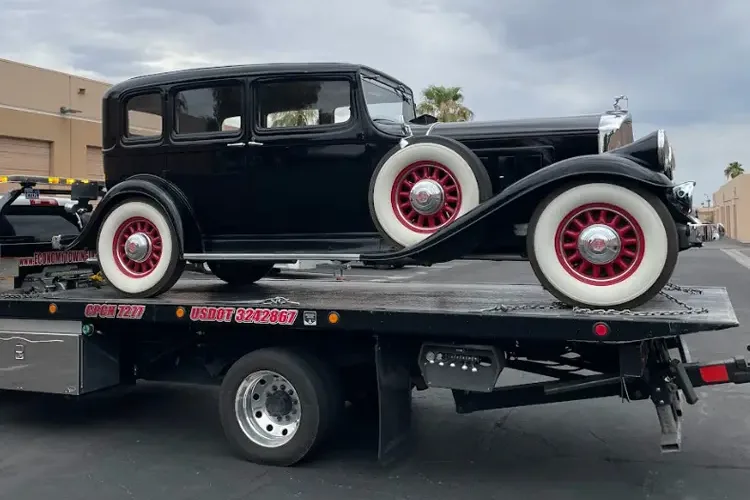
A classic car is not a difficult tow because it is valuable. It is a difficult tow because it is built differently from everything a modern truck is set up for, and because the people who own them are usually right to be particular.
Chrome bumpers that were never structural, body-on-frame construction with specific lift points, drum brakes that may or may not hold, and in many cases paint and trim that cannot be sourced again. Each of those changes something about how the car is handled.
Flatbed, nearly always
For a classic, a flatbed is the default and the reasons are concrete rather than precautionary.
- Nothing drags. Exhausts, valances, lower body panels and rear bumpers on older cars sit where modern approach and departure angles assume nothing is. A wheel lift puts the car at an angle for the whole journey, and that angle is what catches on driveways and ramps.
- No drivetrain is turning. Older automatics frequently should not be towed with the drive wheels down at all, and the lubrication argument that applies to a modern transmission applies more strongly to one that was rebuilt decades ago.
- The car sits level, which matters for suspension that is original and tired.
The general comparison between the two methods is in flatbed versus wheel lift towing, and the ground clearance question is covered in low clearance towing versus standard towing.
Tie-down points, which is where damage happens
This is the part most worth getting right, and the part most often got wrong by someone in a hurry.
- Wheel straps rather than frame hooks, wherever the wheels allow it. Strapping over the tire puts the load into the wheel and tire rather than into suspension components or a frame rail that may have surface rust or old repairs.
- Never over chrome. Bumpers, trim and brightwork on an older car are not structural and they are not replaceable. A strap run over a bumper leaves a mark that is permanent.
- Watch for original undercoating and rust repair. A frame rail that looks sound can be patched. Where a hook point is genuinely needed, it has to be a known good point rather than whatever is reachable.
- Soft loops or protected hooks where a hook is unavoidable.
- Four points, not three, and tensioned evenly so the car is not pulled down harder on one corner.
Tell the driver if your car has known weak points. Most drivers would rather be told.
Winching a car that does not run
Many classics are moved precisely because they do not run, and that changes the loading. A car being winched onto a bed has to be steerable or it will not track up the ramp. If the steering is seized, say so. A car with locked wheels, a seized engine or a parking brake that will not release needs dollies or skates rather than a simple winch pull, and that equipment has to be on the truck when it arrives.
Brakes matter too. A car being winched up a bed with no working brakes needs to be secured as it comes up, not after it is up.
Low ride height and lowered cars
Some classics sit low from the factory and many have been lowered. Approach angle is what decides whether a car can be loaded without contact. Long, low bodywork with a front valance is the hard case, and the usual answers are a bed with a shallower angle, ramps or boards to extend the angle, and in some cases lifting the front of the car as it starts up.
The same considerations apply to lowriders, and they are covered specifically in lowrider towing, and to anything with aftermarket bodywork. Tell dispatch the ride height rather than assuming it will be obvious.
Open bed or enclosed
Around town, an open flatbed is the normal answer and it is appropriate for most moves. For a long distance move, a show car, or a vehicle with fresh paint, enclosed transport is a different proposition and it is worth understanding the trade. The argument is set out in enclosed car transport for classic and exotic vehicles leaving Las Vegas.
The short version is that enclosed protects against road debris, weather and visibility, and costs more and is scheduled rather than dispatched. For a local move to a shop, that is usually more than the job needs.
Heat, which is a Las Vegas specific
Summer heat here affects older cars in ways that create tow calls. Cooling systems that are original, vapor lock in carbureted cars, aged fuel lines and rubber components, and batteries that fail quickly in extreme temperatures. The battery side is covered in dead battery jump start in Las Vegas after extreme heat.
For a car that has overheated, the useful advice is to stop before it becomes damage. A car recovered warm and intact is a far better outcome than a car driven until something failed.
Heat also affects the move itself. A car sitting on an open bed in July is sitting in direct sun, and for a vehicle with a delicate interior or fresh finish that is a consideration worth raising.
What to have ready
- Where it is and the access. A garage, a storage unit, a shop or a driveway each have different constraints, and a storage facility may have a gate code and a tight turning radius. The underground case is covered in underground parking towing.
- Whether it runs, steers and stops, answered separately for each.
- Ride height and any known weak points.
- Whether the wheels turn freely, including whether the parking brake releases.
- Where it is going, with contact and access details at that end.
- Paperwork, if ownership or a sale is involved, which is covered in vehicle ownership paperwork before a tow in Nevada.
Our specialty work is on the classic car towing and exotic car towing pages.
Frequently asked questions
Does a classic car need a flatbed?
In nearly every case, yes. A flatbed keeps the car level, so nothing drags on driveways or ramps, and no drivetrain turns during the journey, which matters for older transmissions that frequently should not be towed with drive wheels down. A wheel lift holds the car at an angle for the whole trip, and that angle is what catches lower bodywork.
Where should the straps go on an older car?
Over the tires wherever the wheels allow it, which puts the load into the wheel and tire rather than into suspension parts or a frame rail that may be patched. Never over chrome bumpers or trim, which are not structural and not replaceable. Four points, tensioned evenly, and soft loops or protected hooks anywhere a hook is unavoidable.
Can you move a classic that does not run?
Yes, and dispatch needs to know what does not work. A car has to steer to track up a ramp, so seized steering changes the plan. Locked wheels, a seized engine or a parking brake that will not release call for dollies or skates, and that equipment has to be on the truck when it arrives rather than fetched afterward.
Do I need enclosed transport?
For a local move to a shop, usually not. An open flatbed is appropriate for most moves around town. Enclosed transport earns its place on long distance moves, show cars and vehicles with fresh paint, where road debris, weather and visibility are the concerns. It is scheduled rather than dispatched and it costs more.
My car is lowered. Will it load?
Usually, and the approach angle is what decides it. A bed with a shallower angle, ramps or boards to extend that angle, and in some cases lifting the front of the car as it starts up are the standard answers. Tell dispatch the ride height when you call rather than letting the driver discover it, because it determines which truck is sent.