
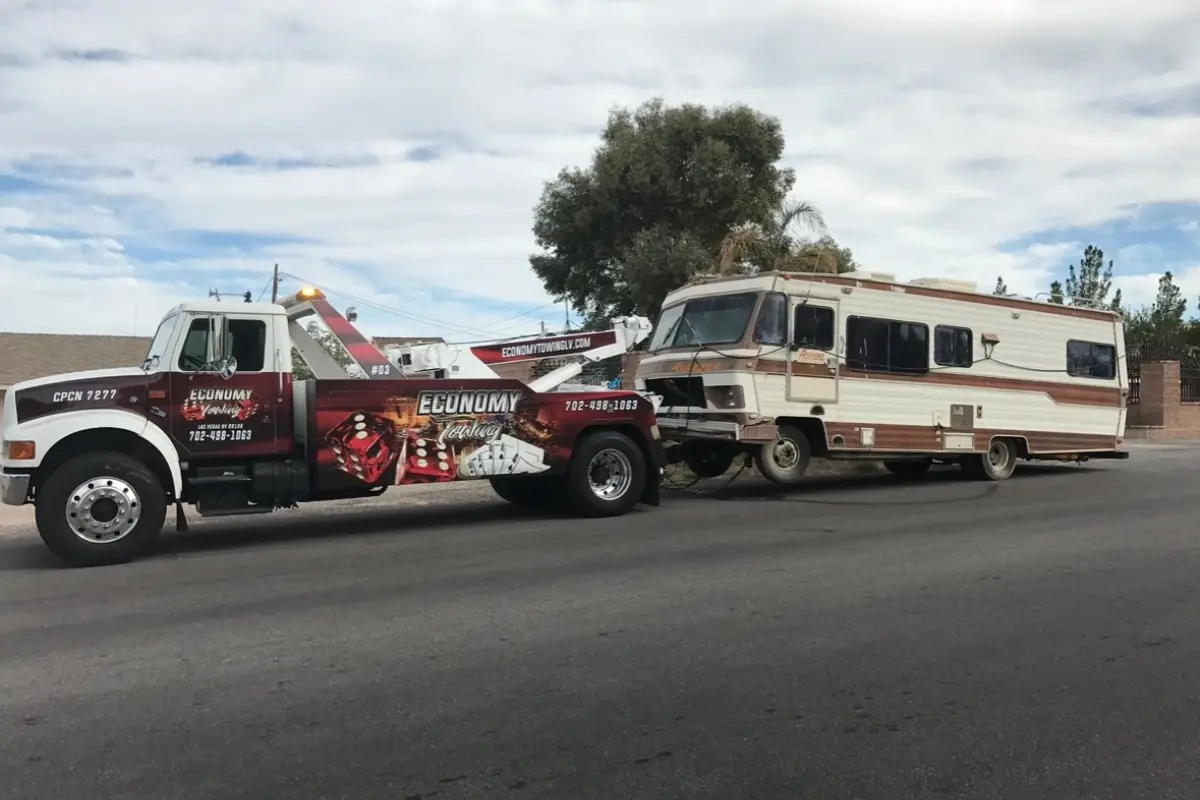
A safety-first playbook for the first minutes, the tow process, and what to handle afterward
A breakdown or a crash in Las Vegas rarely happens at a convenient time or place. It might be on I-15, a crowded surface street near the Strip, or a darker stretch of road on the edge of town. In those moments, most people are balancing the same priorities: stay safe, avoid a second collision, get the vehicle out of danger, and capture the right details so the next steps (insurance, repairs, transportation) are less stressful.
This guide walks through what to do from the first minute through the tow and the immediate follow-up, using widely accepted road-safety practices and the real-world way emergency towing and recovery works across the Las Vegas Valley.
Protect people first, then the scene
The first moments set the tone. Your goal is to reduce risk to you, your passengers, and other drivers.
- Check for injuries. If anyone is hurt—or you suspect head, neck, or back injury—limit movement and get medical help.
- Increase visibility. Turn on hazard lights right away. Being visible is one of the biggest factors in preventing secondary crashes when traffic is still moving around you.
- If the vehicle can move, steer out of active lanes. A shoulder, a nearby parking lot, or a safer side street is usually better than staying in a live lane.
- Keep yourself away from traffic. If you exit, do so on the side away from moving lanes when possible, and keep passengers together.
If you’re unsure whether to exit the vehicle, base that decision on where you are and how exposed you are to fast-moving traffic. A wide shoulder is very different from a narrow lane, a curve, or a bridge.
If you can’t move the vehicle: visibility, staying inside, and when to involve 911
Not every vehicle can be driven to safety. Engine failure, wheel damage, a collision that affects steering, or a sudden stall in traffic can leave you stuck.
- If there’s no safe shoulder or you’re blocking traffic, staying inside may be safer. In many high-speed scenarios, remaining seat-belted inside the vehicle can be safer than standing near moving cars.
- Use hazards immediately and, if you have them, place reflective triangles or other warning devices only if you can do so without stepping into danger.
- Call 911 when the vehicle is in a dangerous position or there are injuries. A breakdown or crash that blocks lanes or creates immediate risk may require police or traffic assistance.
In Las Vegas traffic, secondary risk is real: distracted drivers, high closing speeds, and limited shoulder space can turn a small incident into a serious one. Treat scene safety as your primary job until help arrives.
After a crash: medical checks, documentation, and practical next steps
If the incident involved a collision, you have two parallel tracks: health/safety and documentation.
- Confirm everyone is medically OK. Adrenaline can mask pain. If symptoms appear (dizziness, confusion, chest pain), get help.
- Move to a safer spot if the vehicles can be moved and it’s allowed. If you can get out of active traffic without creating more risk, that often reduces the chance of a second collision.
- Exchange information with the other driver(s). Names, contact information, insurance details, and vehicle plate numbers are typical essentials.
- Document the scene. Take photos of damage, vehicle positions (if safe), nearby signage, and relevant road conditions. If there are witnesses, capture contact details.
- Know when a report matters. If there are injuries, suspected impairment, major damage, or the scene is unsafe, law enforcement involvement is common.
If your vehicle is not drivable after a crash, towing is usually the next step—either to a repair facility, a storage yard, or a secure location you choose.
What to gather before requesting emergency towing
Whether it’s a breakdown or an accident, the fastest path to resolution is sharing the right details early. This also reduces the chance that the wrong equipment shows up.
Open your notes app and capture:
- Exact location. Cross streets, a landmark, a mile marker, your direction of travel, and whether you’re in a lane, shoulder, or parking area.
- Vehicle details. Year/make/model, and whether it’s AWD/4WD.
- Vehicle condition and constraints.
- Can it roll?
- Is a wheel damaged or locked?
- Is it stuck in sand, gravel, or off the pavement?
- Did the crash affect steering, suspension, or the ability to shift?
- Can it roll?
- Destination. Shop address, home address, or another safe drop location.
- Access notes. Parking garage height limits, gate codes, security desks, or tight-space issues.
These details help the towing operator plan the safest loading method and avoid delays.
What emergency towing typically looks like: towing vs. recovery
People often imagine towing as one standard process. In reality, the method depends on the vehicle type and what happened.
Common towing approaches (high level)
Two common setups are:
- Flatbed transport, where the vehicle is loaded fully onto the truck
- Wheel-lift towing, where one end of the vehicle is lifted for transport
Which approach is used often depends on:
- Drivetrain considerations (many AWD vehicles require extra care in how they’re moved)
- Damage condition (a wheel that won’t rotate or steering damage changes the safest approach)
- Ground clearance (low-profile vehicles, steep driveways, or uneven surfaces)
Recovery and winch-outs
Not every emergency is a simple “hook and tow.” Vehicles that slide into a curb, ditch, gravel shoulder, or off-road area may require recovery, which can include winching to get the vehicle back to a towable position.
If you’re off-road or partially off the pavement, note this up front. Recovery often requires more setup than a standard tow.
What happens when the tow truck arrives
A typical sequence is:
- The operator confirms identity, destination, and the vehicle’s condition.
- The operator positions the truck with safety and traffic in mind.
- The vehicle is loaded using the appropriate method.
- The vehicle is secured for transport.
- Drop-off occurs at the requested destination.
Your role is mainly to stay clear of the working area and answer questions about the vehicle’s condition and destination.
After the vehicle is delivered: what to do right away
Once the vehicle is out of danger, it’s worth handling a few items promptly.
- Write down the timeline while it’s fresh. What you noticed first, any warning lights, unusual sounds, and what the vehicle did (or didn’t do). This can help diagnosis.
- Keep documents together. Photos, driver information, and any report details should be stored in one folder.
- Choose the next destination carefully. Multiple moves can add cost and delay, so it’s often simpler to pick a repair location that can actually take the vehicle soon.
- Address common repeat causes. In Las Vegas, battery issues, tire damage, and cooling problems can recur fast in hot conditions, so a post-incident inspection is a practical step.
Emergency towing in Las Vegas is less overwhelming when you follow a clear order of operations: protect people, make the scene visible, move out of danger if you can, and share the right details when you request a tow. After a crash, add documentation to the list so insurance and repairs are easier to handle.
When you treat the first minutes as a safety problem—not a mechanical problem—you reduce risk, speed up the tow process, and get to the next step with fewer complications.