
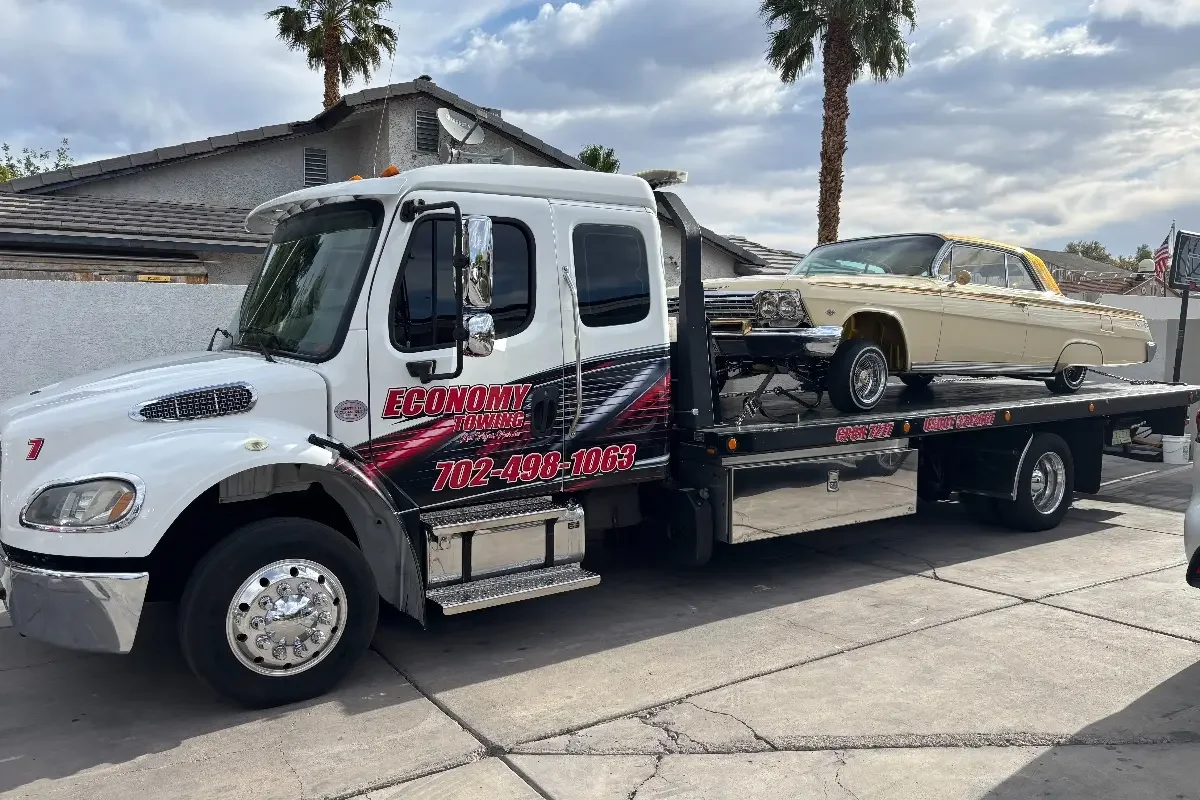
A lowrider is a specialist tow, and not only because of ride height. The suspension is modified in ways that change how the car behaves on a ramp, the frame may have been reinforced or altered, and the finish is frequently the most valuable thing about the vehicle.
The good news is that these cars are usually easy to move when the right equipment arrives. The problem is almost always that the wrong truck was sent.
Ride height is the first question, and it has two answers
A lowrider on hydraulics or air has a static height and a lifted height, and which one applies depends on whether the system is working. If the system works, the car can usually be raised for loading and dropped afterward. That turns a difficult load into a straightforward one, and it is the first thing a driver will ask about.
If the system has failed, and a failed pump, a dead battery bank or a burst line is a common reason for the call, the car is sitting at its lowest and cannot raise itself. That is a different job requiring a shallower approach angle, ramps or boards, and more time.
Tell dispatch which situation you are in. It changes the equipment and it changes the time estimate.
Why a flatbed, and which flatbed
A flatbed is the only sensible answer for these cars, and even then not every bed works. What matters is the approach angle at the bottom of the ramp. A long, low car with a front valance contacts the bed before the wheels reach it unless the angle is shallow enough or it is extended with ramps or boards.
A bed that tilts lower, a longer bed, and recovery boards are the tools. A driver who arrives without them on a car that cannot raise itself will not be able to load it, which is why the first call matters so much. The general comparison is in flatbed versus wheel lift towing, and the ground clearance case in low clearance towing versus standard towing.
Tie-down on a custom car
This is where avoidable damage happens.
- Wheel straps over the tires, wherever the wheels allow. The load goes into the wheel and tire rather than into a modified frame or a suspension component that may be carrying hydraulic hardware.
- Never over trim, chrome or paint. On a show car this is not a preference, it is the difference between a routine move and a claim.
- Mind the hydraulic and air hardware. Pumps, tanks, lines and batteries occupy space under and inside the car, and several of them sit exactly where a hook would normally go. A line crushed by a strap is a repair, and a line crushed and not noticed is a leak discovered later.
- Watch the exhaust and the pan. Custom exhaust routing on a lowered car is often the lowest point of the vehicle.
- Four points, evenly tensioned, so the car is not pulled harder on one corner than another, which matters on a modified frame.
Tell the driver where the hardware is. Nobody can see it from outside the car.
Moving a car with a dead electrical system
A hydraulic setup depends on its battery bank, and a car with a flat bank cannot lift. It may also not be able to be shifted or steered easily, depending on the vehicle. If the car is an older model with a manual column shift and no electrical dependency for steering, it is straightforward. If it has been modified, it may not be.
The practical answer when you call is to say three things separately: whether it rolls, whether it steers, and whether it stops. Those three answers decide whether a winch pull is enough or whether dollies or skates are needed on the truck. The battery side of this, in a climate that is hard on batteries, is covered in dead battery jump start in Las Vegas after extreme heat.
Shows, cruises and events
Las Vegas sees a great deal of show traffic, and a large share of lowrider moves are planned rather than emergencies. For a planned move, two things are worth settling early. Access at both ends, since a show venue, a convention center loading area or a storage unit each have their own constraints and their own hours. And timing, because a venue load-in window is usually fixed and a late truck is a real problem.
For a long distance move or a car going to a show out of state, enclosed transport is worth considering, and the trade is explained in enclosed car transport for classic and exotic vehicles. For a local move to a shop or between a garage and an event, an open flatbed with careful tie-down is normally the right call.
Underground garages and tight access
Parking structures and underground garages are a recurring problem for these cars, and for a different reason than usual. The issue is not the car’s height, which is an advantage. It is the truck’s. A recovery truck may not clear the entrance, which means the car has to be brought out to the truck rather than the truck brought in to the car.
That is a normal procedure, and it requires the car to roll and steer, or dollies to be used. The case is covered in underground parking towing, and resort and garage pickups in exotic car towing for resort and garage pickups.
What to have ready when you call
Year, make and model. Whether the suspension system is working. Current ride height if it is not. Whether it rolls, steers and stops, answered separately. Where the hydraulic or air hardware sits. Where it is and what the access is. Where it is going, with contact details for that end.
Give those on the first call and the right truck with the right equipment shows up once. Our specialty work is on the lowrider towing and classic car towing pages.
Frequently asked questions
Can you tow a lowrider that cannot lift itself?
Yes, and it needs different equipment from one that can. With a working hydraulic or air system, the car is usually raised for loading and dropped afterward, which makes it a straightforward load. With a failed system the car sits at its lowest, which calls for a bed that tilts shallower plus ramps or boards, and more time.
Will towing damage my paint or chrome?
Not with correct tie-down. Straps go over the tires wherever the wheels allow, which puts the load into the wheel and tire rather than onto trim or a modified frame. Nothing goes over chrome, trim or paint. Four points, evenly tensioned, keeps the car from being pulled harder on one corner than another.
What about the hydraulic lines and pumps?
Tell the driver where they are, because nobody can see them from outside the car. Pumps, tanks, lines and battery banks occupy space under and inside the vehicle, and several of them sit exactly where a hook would otherwise go. A line crushed by a strap becomes a repair, and one crushed without being noticed becomes a leak found later.
My car is in an underground garage. Can you reach it?
Usually the car comes out to the truck rather than the truck going in, because the limiting height is the recovery truck’s rather than the car’s. That is a normal procedure and it requires the car to roll and steer, or dollies to be used. Say when you call that the car is in a structure, so the right equipment comes.
Can you move my car to a show?
Yes, and a planned move is easier than an emergency one if two things are settled early. Access at both ends, since venues, convention loading areas and storage units each have their own constraints and hours. And timing, because load-in windows are usually fixed and a late truck is a genuine problem for the event rather than an inconvenience.