
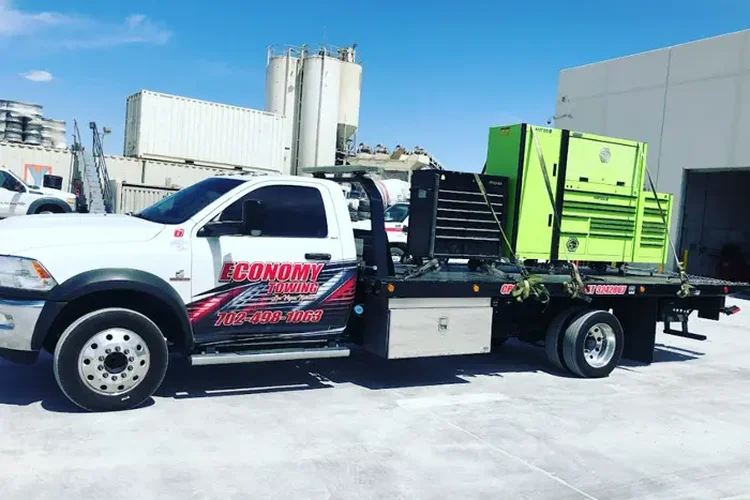
A technician changing shops has one problem that nobody else has: the box. A full roll cab with a top chest, a side cabinet and a hutch is a serious piece of equipment, loaded with steel, on casters that are not designed to roll anywhere except across a shop floor.
People routinely try to move one with friends and a rented truck, and it routinely goes badly. The weight is the least of it.
Why it is harder than it looks
- The weight is concentrated and high. A loaded box carries most of its mass in the drawers, and the center of gravity rises as the top chest and the hutch are added. A box that is stable standing still becomes unstable the moment it is on a ramp or a tilted surface.
- Casters are shop casters. They are made to roll on a flat, clean floor. On a driveway, a parking lot, a lip at a doorway or a ramp, they catch, swivel and fail. Casters fail under load more often than anything else in these moves.
- Drawers want to open. A box tipped on a ramp with unlatched drawers becomes dangerous fast. Even with latches engaged, the latch is not designed to hold a full drawer against gravity at an angle.
- It is not designed to be lifted. Most boxes have no designated lift points. Strapping one improperly bends sheet metal and jams drawers permanently.
- It fits through the door it came in by, and no other. Dimensions matter at both ends.
What transport needs to know
- Overall dimensions, assembled, including the hutch and any side cabinet, and whether the sections separate.
- Approximate weight, loaded or empty. There is a very large difference, and the honest answer changes the equipment.
- Whether it will travel loaded or emptied. Emptying it is more work for you and it makes the move considerably safer and easier.
- Access at both ends. Ground level or a step, a ramp, a dock, a doorway width, and how far it has to travel across what surface.
- The condition of the casters, and whether the box rolls at all.
- Whether anything is on top of or attached to it, including a power unit, a monitor arm, a vice or a riser.
- Stairs, which change the job completely and need to be mentioned on the first call rather than discovered.
Loaded or emptied
This is the decision that determines everything else, and it is yours to make. Moving it loaded is faster for you and harder on the box. The weight stresses the frame and the casters, drawers are under load for the whole trip, and if anything shifts, it shifts hard. For a short move on good surfaces with a liftgate at both ends, it is reasonable.
Emptying it is a day of work and it removes nearly all the risk. The box becomes light enough to handle safely, the center of gravity drops, and drawers cannot shift.
The middle option is emptying the top drawers only, which is where the heavy sockets and wrenches usually live, and leaving the lower ones. That takes a fraction of the time and removes a disproportionate share of the problem.
How it actually gets moved
- A liftgate, or a ramp with a winch. A loaded box does not get muscled up a ramp safely, and the method should be established before anyone starts.
- Straps around the body, not through the handles. Handles are not structural on most boxes, and a strap through one bends it.
- Padding at every strap point, because the sheet metal marks.
- Drawers latched and, ideally, taped or strapped shut as a second line of defense.
- Secured upright and against movement in both directions on the truck, with the box tied so it cannot roll on its casters during transit. Casters on a moving truck bed are the main hazard, and blocking them is as important as strapping.
Shop to shop, which is most of these moves
A technician changing employers is the common case, and the constraints are usually about timing rather than distance. Both shops are operating businesses. The outgoing shop wants the box gone, often after hours or between jobs, and the incoming shop has a bay where it needs to land. A move that arrives at the wrong hour is a problem at both ends.
Settle the window with both shops before booking the transport rather than after. It is the single most common cause of a wasted trip.
If the box is being stored between jobs, storage access hours and surface conditions matter. A storage unit with a gravel approach is a different job from one with a concrete apron.
Other equipment that moves with it
Technicians rarely move only a box. A transmission jack, an engine hoist, a parts washer, a welder, a compressor, a creeper and a rolling cart frequently travel together. Mention the whole list when you call, because it changes the truck and it changes the time. Larger shop equipment is covered in small machinery transport and the heavier end in heavy equipment transport preparation.
Heat, which matters more than people expect
A closed truck in a Las Vegas summer reaches temperatures that affect several things in a toolbox. Electronics, batteries, adhesives and anything in an aerosol can do not belong in a box sitting in a sealed truck in July. The same applies to precision measuring equipment, which should travel with you rather than in the box. That is not a transport limitation so much as a packing instruction, and it is worth following.
What to have ready
Dimensions assembled, approximate weight, whether it is loaded, the access at both ends including steps and doorway widths, the caster condition, the full list of other equipment, and the time window both shops have agreed to. Our specialty transport work is on the toolbox transport and small machinery transport pages, and the broader commercial capability on commercial towing service in Las Vegas.
Frequently asked questions
Should I empty my toolbox before it is moved?
It is safer and easier if you do, and it is a day of work. Emptying drops the center of gravity, relieves the frame and casters, and stops drawers shifting. The practical middle option is emptying the top drawers where the heavy sockets and wrenches live and leaving the lower ones, which takes a fraction of the time and removes most of the risk.
Why do toolbox casters fail during a move?
Because they are shop casters, designed to roll on a flat clean floor. On a driveway, a parking lot, a door lip or a ramp they catch, swivel and break under load. Caster failure is the most common thing that goes wrong in these moves, which is why a liftgate or a winched ramp beats rolling the box any distance.
How is the box secured for transport?
Straps around the body rather than through the handles, which are not structural on most boxes and bend. Padding at every strap point, because the sheet metal marks. Drawers latched and preferably taped shut as a second line of defense. And the casters blocked, since a box that can roll on a moving truck bed is the main hazard.
Can you move it up or down stairs?
Mention stairs on the first call, because they change the job entirely rather than adding a little time. A loaded box on stairs is a serious undertaking and in most cases the answer is to empty it first. Knowing in advance means the right equipment and the right number of people arrive together.
What else should I tell you about?
The full list of equipment moving with the box. Transmission jacks, engine hoists, parts washers, welders, compressors and rolling carts routinely travel at the same time, and they change both the truck and the duration. Also tell us the time window both shops have agreed to, since a wrong arrival hour is the most common cause of a wasted trip.