
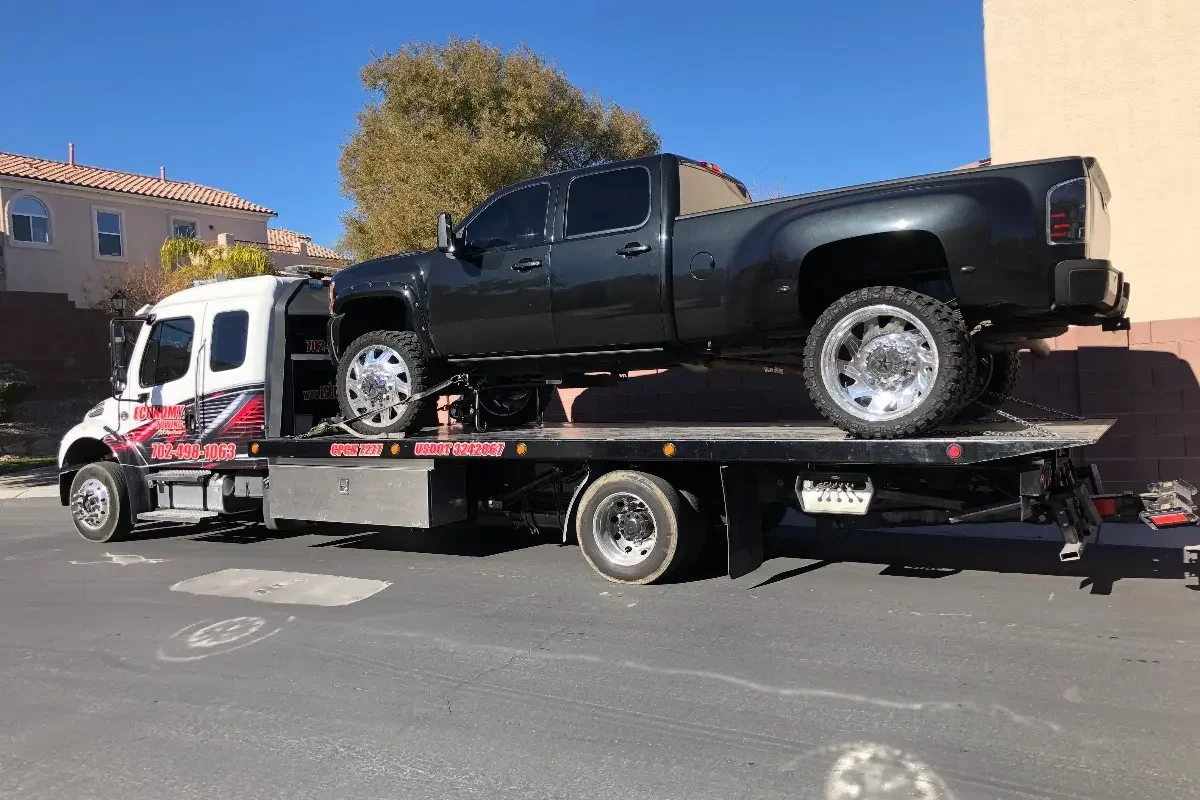
A lifted truck is a hard tow for reasons that are the opposite of a lowered car. Nothing drags. The problems are height, width, weight and the fact that the attachment points are not where the equipment expects them.
Send the wrong truck and the driver arrives, looks at it, and leaves. That wastes everyone’s time, and it is almost always avoidable with two minutes on the phone.
What the lift actually changes
- Attachment points sit high. A wheel lift is designed to reach under a vehicle at a certain height and capture the tires. On a truck with a substantial lift, the geometry no longer works, and the equipment that does work is different.
- Tires are wider and taller. Wheel lift cradles and wheel straps have size limits. Oversized tires can exceed what standard equipment accommodates, and that is a hard stop rather than a matter of effort.
- Weight is higher than stock, often considerably. A lift kit, heavier wheels and tires, bumpers, a winch, a bed rack and armor add up fast, and the truck that handles a stock version of the same vehicle may be undersized for yours.
- Loaded height becomes a route constraint. A tall truck on a flatbed is taller still, and that governs which routes and which parking structures are available. The related case is in underground parking towing.
- Suspension travel changes the loading angle, and a long travel setup behaves differently coming up a ramp than a stock suspension does.
What dispatch needs to know
- Year, make and model, as the starting point.
- Lift height, as accurately as you know it. There is a real difference between a leveling kit and a serious lift, and the equipment choice follows from it.
- Tire size, which is usually written on the sidewall. This decides whether wheel straps and cradles will fit.
- Modifications that affect weight or attachment: steel bumpers, a winch, armor, a rack, a camper or a service body.
- What is wrong with it. A truck that rolls and steers is a different job from one with a locked wheel or a broken axle.
- Four wheel drive and whether it can be put in neutral, which matters for how it can be moved. That question is discussed in towing all wheel drive and four wheel drive vehicles.
- Where it is, with the access described. A trail, a wash, a shoulder or a driveway each change the approach.
That is a short list and it determines everything. The broader comparison of truck classes is in light duty versus medium duty tow truck service.
Flatbed or wheel lift
For most lifted trucks a flatbed is the practical answer, and the reasons are about fit rather than about care. A flatbed does not need to reach under the vehicle at a particular height, it does not care about the lift geometry, and it keeps the drivetrain stationary, which matters on a four wheel drive truck that cannot be safely put in neutral.
The trade-off is loaded height, and on a very tall truck with oversized tires the combined height can become the limiting factor. That is one of the few cases where a wheel lift with the correct equipment may be preferable, and it is a judgment the driver makes on site. The general comparison is in flatbed versus wheel lift towing.
Winching a lifted truck onto a bed
Loading is where the lift matters most. A truck has to steer to track straight up a ramp, so seized steering changes the plan entirely. The approach angle is less of a problem than it is with a low car, and the departure over the top of the ramp can be, particularly on a long wheelbase truck.
Tie-down is the other consideration. Wheel straps over oversized tires need the right size strap, and frame hooks on a lifted truck are often obstructed by armor, a skid plate or aftermarket suspension components. Tell the driver where the known good points are if you have modified the truck heavily.
Off road recoveries
A fair share of lifted truck calls are not breakdowns. They are recoveries, and in this region that means a wash, a trail or soft ground.
Those are a different operation from a tow, requiring winching from a stable position and sometimes a second vehicle. The distinctions are set out in off road recovery service versus towing and winch out service versus towing.
Three things matter when you call from off pavement. Where you actually are, described well enough that a truck can reach you. What the surface is: sand, rock, mud or a steep bank. And whether the vehicle is damaged or simply stuck, because those need different equipment. The sand case is covered in car stuck in sand tow and the slope case in car stuck in ditch tow.
Heat and the desert
Modified trucks get driven where heat and dust are hardest on them. Cooling systems working against larger tires and heavier gearing, transmissions running hotter than stock, and tires aged by heat and ultraviolet exposure as much as by mileage. None of those is a towing matter until it is, and all of them produce calls.
If a truck has overheated, stopping before it becomes damage is the right decision. A recovery costs less than an engine.
What happens when you call
The useful version of the call is short and specific. Year, make, model, lift height, tire size, what failed, where you are and what the access looks like.
That lets the right truck be sent the first time, which is the whole point. The general flow from dispatch to drop-off is in towing service in Las Vegas, what to expect from dispatch to drop-off, and our specialty work is on the lifted truck towing page.
Frequently asked questions
Why does a lifted truck need special equipment?
Because the attachment points sit higher than standard equipment is designed to reach, tires are often wider and taller than wheel straps and cradles accommodate, and the truck weighs considerably more than stock once a lift, heavy wheels, bumpers, a winch and armor are added. Those are fit and capacity limits rather than matters of effort.
What should I tell dispatch about my truck?
Year, make and model, lift height as accurately as you know it, tire size from the sidewall, any modifications that add weight or block attachment points, what actually failed, whether it is four wheel drive and can be put in neutral, and where it is with the access described. That short list decides which truck is sent.
Flatbed or wheel lift for a lifted truck?
A flatbed in most cases, because it does not have to reach under the vehicle at a particular height and it keeps the drivetrain stationary, which matters on four wheel drive. The exception is a very tall truck on oversized tires, where combined loaded height becomes the constraint. The driver makes that call on site.
Can you recover a truck that is stuck off road?
Usually, and it is a recovery rather than a tow, which means different equipment. When you call, say exactly where you are in terms a truck can navigate to, what the surface is, whether it is sand, rock, mud or a steep bank, and whether the vehicle is damaged or simply stuck. Those three answers decide what gets sent.
Where do the straps go on a heavily modified truck?
Over the tires where strap size allows, since frame points on a lifted truck are frequently blocked by armor, skid plates or aftermarket suspension. If you have modified the truck substantially, tell the driver where the known good attachment points are. Most drivers would far rather be told than have to find out.