
An all wheel drive vehicle towed the wrong way can arrive at the shop with a problem it did not leave with. The damage is not caused by the tow truck. It is caused by turning part of the drivetrain while the rest of it stands still. Understanding why takes a minute, and it explains nearly every decision a driver makes about one of these vehicles.
Why it matters
In a conventional rear wheel drive car, lifting the drive wheels off the ground stops the driveshaft and the transmission output from turning. Nothing inside spins.
In an all wheel drive vehicle, front and rear are coupled. Turning one set of wheels turns components all the way through the system, including the center differential or coupling and, on many vehicles, part of the transmission.
The problem is lubrication. Those components are lubricated by pumps driven by the engine, or by oil distributed by the rotation of parts that are not rotating during a tow. Spinning them for miles without that lubrication is what causes damage, and the damage can be silent until it is not. The same argument applies to many modern front wheel drive automatics, which is why flatbeds have become the default for so much of the fleet.
What a flatbed solves
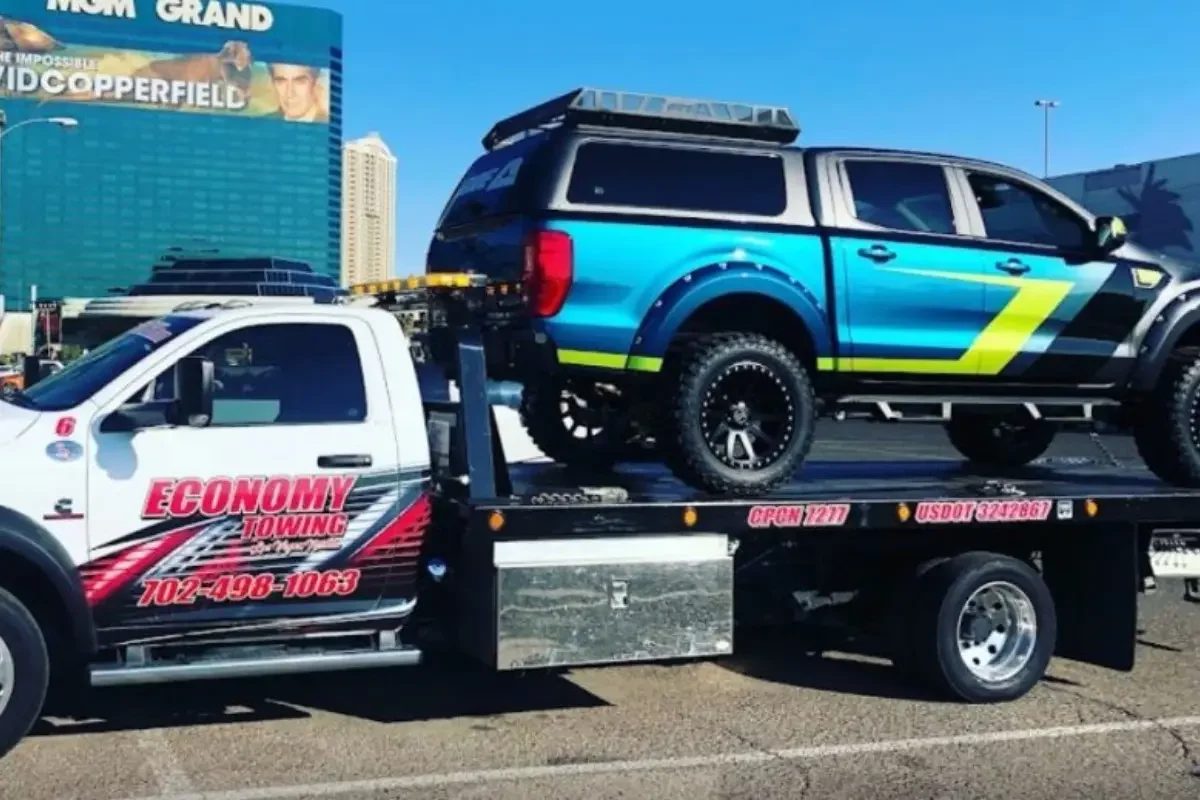
A flatbed takes all four wheels off the ground, so nothing in the drivetrain turns at all. That is the complete answer for all wheel drive. It is why a flatbed is requested for these vehicles as a matter of routine rather than as an upgrade, and the general comparison is in flatbed versus wheel lift towing. It also happens to suit the other things that come with modern vehicles: low front bodywork, sensors in bumpers, and air suspension that may not be in a normal state when the vehicle is disabled.
Dollies, and when they are the answer
When a flatbed cannot be used, because of access, a parking structure or availability, dollies are the alternative. A set of dollies goes under the wheels that would otherwise be on the ground, so again nothing turns. For a four wheel drive vehicle that means one axle on the wheel lift and the other on dollies.
That works, and it takes longer to set up and needs the dollies to actually be on the truck. If a structure or a tight space means dollies will be needed, say so when you call rather than when the driver arrives. The structure case is covered in underground parking towing. The general distinction is explained in dolly towing service and wheel lift towing service.
Neutral on a transfer case, which is not the same as neutral on a transmission
This is the point most often misunderstood. On many body-on-frame four wheel drive vehicles there is a transfer case with its own neutral position, separate from the transmission. Putting the transfer case in neutral genuinely disconnects the wheels from the transmission, and on some vehicles that makes flat towing with all four wheels on the ground possible.
Several conditions apply. The procedure is vehicle-specific and getting it wrong leaves the vehicle in a state nobody wants. The vehicle has to actually have a transfer case neutral, and many modern four wheel drive systems do not. The steering must be unlocked, which usually means the key in a particular position or the vehicle in a particular state. And the manufacturer’s own instructions are the authority rather than a general rule.
For a disabled vehicle, where the electrical system may be part of the problem, the transfer case may not be able to be shifted at all. That is why a flatbed stays the default.
What dispatch needs to know
- Year, make and model, which answers most of it.
- All wheel drive or four wheel drive, and if four wheel drive, whether it is part time with a transfer case or full time.
- Whether it can be put in neutral, which includes whether the electrical system works.
- Whether the steering unlocks.
- Whether all four wheels roll freely, and if not, which one does not. A seized brake or a damaged wheel bearing changes the equipment.
- Where it is and the access, since that determines whether a flatbed can get to it at all.
- Ground clearance or modifications, which is covered for trucks in lifted truck towing and for low vehicles in low clearance towing versus standard towing.
Electric and hybrid vehicles
Electric vehicles take the rule further. Many of them should not be towed with any wheels turning at all, since the motors generate current when driven, and the manufacturers are generally explicit about flatbed only.
They also bring their own handling considerations around the battery pack, particularly after a collision. That subject has its own page in towing an electric vehicle in Las Vegas.
Hybrids vary. Some are flatbed only and some are not, and the owner’s manual is the authority.
The accident case
After a collision, the drivetrain question is usually secondary to whether the wheels turn at all. A vehicle with collision damage may have a bent control arm, a seized wheel or a damaged axle, and no amount of transfer case neutral helps with that. These are loaded, which is one of several reasons flatbeds are the standard response to accidents, as described in flatbed towing service after a minor accident and accident recovery towing.
The simple version
If your vehicle sends power to all four wheels, ask for a flatbed and say so when you call. If a flatbed genuinely cannot reach it, dollies are the alternative and they need to be on the truck. If someone proposes towing it with two wheels on the ground and no dollies, ask what the manufacturer says, because for most all wheel drive vehicles the answer is that it should not be done. The general flow from the call to the drop-off is described in towing service in Las Vegas, what to expect from dispatch to drop-off.
Frequently asked questions
Can an all wheel drive car be towed with two wheels on the ground?
Generally no. Front and rear are coupled, so turning one set of wheels turns components throughout the system, including parts that are lubricated only when the engine is running or when other parts are rotating. Spinning them unlubricated for miles is what causes damage, and the damage can stay silent until well after the tow.
Does putting the transfer case in neutral solve it?
Sometimes, on vehicles that actually have a transfer case neutral, which many modern systems do not. The procedure is vehicle-specific, the steering has to be unlocked, and the manufacturer’s instructions are the authority rather than a general rule. On a disabled vehicle with electrical problems the transfer case may not shift at all, which is why a flatbed stays the default.
What if a flatbed cannot reach my vehicle?
Dollies are the alternative. They go under the wheels that would otherwise be on the ground, so again nothing in the drivetrain turns. It takes longer to set up and the dollies have to be on the truck, so mention the access problem when you call rather than when the driver arrives, especially for a parking structure.
Is it different for an electric vehicle?
Yes, and the rule is stricter. Many electric vehicles should not be towed with any wheels turning, because the motors generate current when driven, and manufacturers are generally explicit about flatbed only. They also bring battery considerations after a collision. Hybrids vary, and the owner’s manual is the authority for a specific model.
What should I tell dispatch?
Year, make and model, whether it is all wheel or four wheel drive, whether it can be put in neutral and whether the electrical system works, whether the steering unlocks, whether all four wheels roll freely and which one does not if any, and the access where it sits. Those answers decide whether a flatbed, dollies or both are needed.